CIE100: Common Intellectual Experience
[ Course Info | Course Objectives and Goals | Resources | Instructors | Textbooks | Schedule | Grading | Course Policies | Course Details ]
.jpg)

Course Info
- Course Number and Title: CIE100 - Common Intellectual Experience
- Section J
- Credit Hours: 4 Semester Hours
- Credit Hours include "contact time" in the classroom and outside course work. It is expected that the sum of classroom time and outside course work time should add up to three times the listed credit hours per week.
- Course Designation: CIE
- Course Webpage: https://BillJr99.github.io/Ursinus-CIE100-Fall2026
- LMS (Canvas): Canvas
- Course Calendar: Import the course calendar into your favorite calendar app with this link!
- Academic Term: Fall 2026-27
- Term Start and End: through
- Course Prerequisites: None
- Class Meeting Locations and Times:
- Section J:
- s from 1:30 PM to 2:45 PM in Pfahler 208
- s from 1:30 PM to 2:45 PM in Pfahler 208
- Course Description: The first of a two-semester course introducing inquiry into the core questions of liberal education at Ursinus: What should matter to me? How should we live together? How can we understand the world? What will I do? The course will explore these questions through the study of influential primary texts. The first semester focuses on texts from antiquity up to the modern era. Four semester hours. (CIE)
Course Learning Objectives and Learning Goals
Learning Goals
- Students will develop habits of self-reflection about what matters to them.
- Students will become active participants in a campus intellectual community.
- Students will become better critical readers of texts from a wide range of disciplines, cultures and time periods.
- Students will become more skilled participants in group discussions.
- Students will become better writers.
The Questions
Throughout the course, we will be thematically guided by the Ursinus Questions:- What should matter to me?
- How should we live together?
- How can we understand the world?
- What will I do?
Resources
Accommodations
Ursinus College and your instructor are committed to ensuring equal access and providing reasonable accommodations for all students. If you have, or think you have, a disability in any area such as, mental health, attention, learning, chronic health, sensory, or physical, please contact the Director of Disability Services.As the instructor of this course, I strive to provide an inclusive learning environment. If you experience barriers to learning in this course, do not hesitate to discuss them with me. The Office of Disability and Access works with students who have any kind of disability, whether apparent or non-apparent, learning, emotional, physical, or cognitive, and need accommodations to increase their access to this learning environment. Students are encouraged to reach out to the disability and access team to discuss supports and accommodations they may need by scheduling a meeting using their scheduling link: https://kderstine.youcanbook.me/, or by emailing them at disabilityandaccess@ursinus.edu. Students can also review accessibility and disabilities services online at the Disability and Access at Ursinus Webpage. Their office is located in Lower Wismer, with the Institute for Student Success (ISS) office.
Peer Coaching
The Institute for Student Success offers Peer Coaching that you can sign up for anytime. The Institute for Student Success (ISS) is located in Lower Wismer, and connects students to the resources, activities, services, and programs that can help students be successful, thrive, and persist to graduation. They offer academic skills workshops, one-on-one coaching, tutoring, and more. Specifically, they offer course level tutoring as well as peer academic coaching (for help with time management, SMART goal setting, breaking down large assignments, and more). Contact them at instituteforstudentsuccess@ursinus.edu or 610-409-3400.Wellness Center
If you are struggling with mental, physical, or substance use concerns that are negatively impacting your life, relationships, or academics, please reach out for support. The Wellness Center's Counseling staff and the Health Promotion staff collaborate to support students and they are all co-located in The Hive. The Wellness Center offers counseling and medical services at no cost to students. All services are confidential. For urgent mental health issues, a walk-in crisis hour is available at 2-3 pm each weekday, where students in crisis can be seen immediately by a clinician. A 24/7 on-call clinician is also a part of the campus Crisis Response Team. Health Promotion offers support services for students in recovery and Allies of Recovery training for friends/loved ones, and hosts many events and programs to help students build a healthy lifestyle and discover coping strategies. Visit ursinus.edu/wellbeing for wellness services campus wide and visit the office's website (https://www.ursinus.edu/offices/wellness-center/) for a full description of all services.Center for Writing and Speaking
The Center for Writing and Speaking is available for one-on-one and group appointments to advise you as you revise your writing projects and presentations. They will even support your personal projects and extracurricular activities! Please feel free and encouraged to review any and all writing and speaking work from this class with them. Make an appointment at https://ursinus.mywconline.net/.Bear2Bear and Basic Needs/Wellbeing
The college recognizes that temporary financial hardships can impact students' access to course materials, as well as their access to opportunities on campus. Please be aware of the Bear2Bear fund, which has been established by donors to the college and provides special grants for students who have exhausted other sources of funding. For information on assistance in getting other basic needs met, please visit https://www.ursinus.edu/wellbeing.Help Room
The Math Help Room (Pfahler 102) is a great place to go if you are struggling and is managed by the Institute for Student Success. Students who have previously taken the course will be there to help you with the assignments.Course Management Systems: Canvas, Microsoft OneNote, and Microsoft Teams
We will be using Canvas to post all of the grades. For the most part, we will submit work using Canvas as well. For class activities and notes, we will be using OneNote, and for other discussions and announcements for the course, including messaging me directly with questions, we will use Microsoft Teams. OneNote and Teams are linked to your Office suite through Ursinus, so you are automatically enrolled. There you can ask and answer questions about the lecture content and assignments.Since it is likely that students will have similar questions, it is much more efficient for me to answer them there so the whole class can see the answer, so it is possible that I will ask you to re-send a question publicly that I get in an e-mail. If you'd prefer, I could anonymize the question as well, but I'd like you to have the opportunity to post it so that you are credited with having such a good question!
Course Instructors and Student / Office Hours
| Role | Name and Contact Information | Student Hours / Office Hours |
|---|---|---|
| Professor |
William Mongan

Phone: 610-409-3268 E-Mail: wmongan@ursinus.edu Office: Pfahler Hall 101L |
Sign up for a one-on-one appointment during my office hours! |
| Writing Fellow |
Vienna Gurev
E-Mail: vigurev@ursinus.edu |
|
Textbooks
| Required? | Title | Author | Edition | ISBN | Freely Available? |
|---|---|---|---|---|---|
| Required | CIE Reader (includes Plato's Allegory of the Cave and Euthyphro, Islamic Mystic Poetry, Darwin, McPhee, Deloria, McLuhan, and Forster selections) | CIE Coordinators, editors | |||
| Required | Plato, Allegory of the Cave (selection from Republic, Book VII; also included in the CIE Reader) | Plato | Online Version | ||
| Required | Dear Ijeawele, or a Feminist Manifesto in Fifteen Suggestions | Adichie, Chimamanda Ngozi (New York, Anchor Books, 2017; ISBN 9780525434801) | |||
| Required | Between the World and Me | Coates, Ta-Nehisi (New York: Spiegel and Grau, 2015; ISBN 9780812993547) | |||
| Required | Genesis | Robert Alter, translator (New York: Norton, 1996; ISBN 9780393316704) | |||
| Required | Sappho: A New Translation | Mary Barnard, translator (Berkeley: University of California Press, 1958; ISBN 9780520305564) |
Course Schedule
| Week | Date | Title | Readings and Preparation | Deliverables Handed Out | Deliverables Due |
|---|---|---|---|---|---|
| Convocation and Common Event |
|
|
|||
| Week 1 | Plato, Allegory of the Cave: Close Reading Workshop (Shadows, Screens, and the Ascent) |
|
|
||
| Week 1 | Adichie, Dear Ijeawele: The First Seven Suggestions |
|
|||
| Week 2 | Adichie, Dear Ijeawele: Suggestions Eight Through Fifteen |
|
|||
| Week 2 | Essay 1 Workshop: Brainstorming, Sample Essays, and Thesis Construction |
|
|||
| Week 3 | Katie Merz, Live the Questions (The Smokestack): Analyzing Visual Materials |
|
|
||
| Week 3 | Sappho: Fragments, Longing, and the Survival of Texts |
|
|||
| Week 4 | Sappho, Continued: Reconstruction and Interpretation |
|
|||
| Week 4 | Islamic Mystic Poetry: Longing for the Divine |
|
|||
| Week 5 | Islamic Mystic Poetry, Continued: Translation, Tradition, and Context |
|
|||
| Week 5 | Plato, Euthyphro: What Is Piety? |
|
|
||
| Week 6 | Revision Workshop: From First Draft to Final Draft |
|
|
||
| Week 6 | Euthyphro, Continued: The Dilemma and Its Descendants |
|
|||
| Week 7 | Coates, Between the World and Me, Part I: The Body and the Dream |
|
|
||
| Week 8 | Coates, Continued: Letters, Fear, and Love |
|
|
||
| Week 9 | Coates, Between the World and Me, Part II: The Mecca |
|
|||
| Week 9 | Coates, Between the World and Me, Part III: Legacy and Hope |
|
|||
| Week 11 | Genesis 1-11: Creation, Naming, and Babel |
|
|||
| Week 11 | Genesis 12-22 and Revision Workshop |
|
|||
| Week 12 | Darwin: Descent with Modification and Evolution Beyond Biology |
|
|||
| Week 12 | McPhee: The Control of Nature and Engineering Against the River |
|
|||
| Week 13 | CIE Common Event: Docent-Led Tour at the Berman Museum of Art (No Regular Class; We Meet at the Museum) |
|
|||
| Week 13 | Deloria: God Is Red, the Sacredness of Place, and Essay 3 Brainstorming Workshop |
|
|||
| Week 14 | McLuhan: The Medium Is the Message |
|
|
||
| Week 15 | McLuhan, Continued: Media as Environments |
|
|||
| Week 15 | Forster, The Machine Stops: Prophecy from 1909 |
|
|||
| Week 16 | Forster, Continued, and Final Revision Workshop (Tuesday 12/8 Follows a Thursday Schedule) |
|
|
- Add Deadline:
- Drop with a W Deadline:
- Reading Day:
- CIE Common Event: student docent-led tour at the Berman Museum of Art (our section tours during our Tuesday, November 17 class period, connecting the exhibition to Deloria's God Is Red):
Grade Breakdown
Letter grades will be assigned on the scale below at the end of the course. "Grade grubbing" is not conducive to professional practice; every assignment has or will have very precise expectations and point breakdowns, and I will evaluate submitted work carefully according to these standards. I will also return assignments in a timely manner, and the running weighted grades will be updated frequently. Therefore, I expect a commensurate level of respect from you. In sum, you should know where you stand at all times, there will be plenty of opportunities to improve your standing, and there should be no surprises at the end of the course.Grading Table
| Item | Weight |
|---|---|
| Essay 1 | 20% |
| Essay 2 | 20% |
| Essay 3 | 20% |
| In-Class Participation | 30% |
| Informal Writing | 10% |
Letter Grades
| Letter | Grade Range |
|---|---|
| A+ | 96.9-100 |
| A | 93-96.89 |
| A- | 89.5-92.99 |
| B+ | 87-89.49 |
| B | 83-86.99 |
| B- | 79.5-82.99 |
| C+ | 77-79.49 |
| C | 73-76.99 |
| C- | 69.5-72.99 |
| D+ | 67-69.49 |
| D | 63-66.99 |
| D- | 59.5-62.99 |
| F | 0-59.49 |
Course Policies
Classroom Environment and Inclusivity Standards
In this class we will work to promote an environment where everyone feels safe and welcome, even during uncomfortable conversations. As we explore these ideas, every voice in the room has something of value to contribute to group discussion. Every participant must show respect for all others. You are encouraged to not only take advantage of opportunities to express your own ideas, but also to learn from the information and ideas shared by other students. Participation is crucial to the success of this classroom experience. Your insights, questions and comments will be useful not only to yourself and to your a professor, but to your fellow students. My goal is to foster a environment in which students across all axes of diversity feel welcome and valued, both by me and by their peers. Axes of diversity include, but are not limited to, age, background, beliefs, race, ethnicity, gender/gender identity/gender expression (please feel free to tell me in person or over e-mail which pronouns I should use), national origin, religious affiliation, and sexual orientation. Discrimination of any form will not be tolerated. Please see me if you have any questions about our classroom environment. Discriminatory acts can be reported by following the process outlined on the college policy on discriminatory acts. Furthermore, I want all students to feel comfortable expressing their opinions or confusion at any point in the course, as long as they do so respectfully. As I will stress over and over, being confused is an important part of the process of learning computer science. Therefore, I will not tolerate any form of put-downs by one student towards another about their confusion or progress in the class. Learning computer science and struggling to grow is not always comfortable, but I want it to feel safe. Much of this material is probably new to everyone, and those with some prior experience likely recall a time when it was new to them, too. Remember that this is not a competition: helping others to grow is itself a richly rewarding professional development opportunity. In order to allow for equitable access to class for students who may be attending and participating remotely, I may record our class sessions. These recordings will only be available on our Canvas site. I will announce that we are recording in the beginning of any classes of this kind; out of respect and privacy for me and all class members, please do not download, copy, or redistribute class recordings.
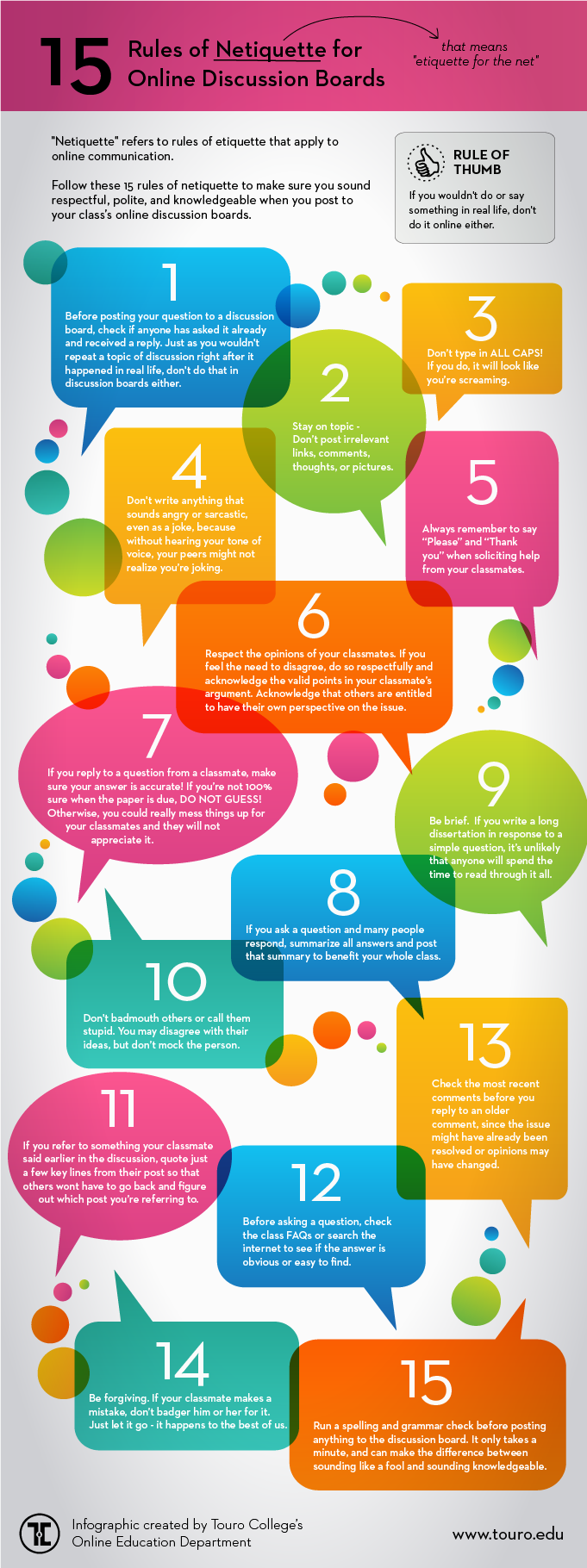
Online Communication Policy
Since this is a class-wide communication, the following rules apply to message groups and electronic communications:- Students are expected to be respectful and mindful of the classroom environment and inclusivity standards.
- They are equally applicable to a virtual environment as they are in class.
- Students are not permitted to share direct answers or questions which might completely give away answers to any homework problems or labs publicly on Microsoft Teams. When in doubt, please send me a direct message there.
- I will attempt to answer questions real time during student / office hours. Otherwise, I will make every attempt to respond within 24 hours. Of course, students can and should still respond to each other outside of these intervals, when appropriate!
- Students may ask anonymous questions.
Early Alerts
From time to time, I may send academic early alerts through the college to you regarding your academic performance or engagement in the class. These alerts are intended to help you engage in a way that will improve your ability to be successful. Should I send you an alert, I expect that you will follow up with me within 5 days to discuss your engagement on campus or in our class.Religious and Spiritual Life Observance Policy
Per the Religious and Spiritual Life Observance Policy, students who expect to miss classes, examinations, or other assignments due to religious observance may notify me two weeks prior to the observance. I will be happy to discuss reasonable alternatives with you.Collaboration Policy and Academic Integrity Policy
Communication between students is allowed (and encouraged!), but it is expected that every student's code or writeups will be completely distinct! Please do not copy code off of the Internet (repurposing code from the Internet will probably make it harder anyway because the assignments are so specialized). Please cite any sources in addition to materials linked from the course website that you used to help in crafting your code and completing the assignment.See the Course Management page in the Faculty Handbook for an explanation of college policies on plagiarism and other academic honesty violations.
To encourage collaboration, students will be allowed to choose one "buddy" to work "near" during the assignment. Students are still expected to submit their own solutions, but they are allowed to provide substantial help to their designated buddy, and even to look at the buddy's code during the process. Students must indicate their buddies in the README upon assignment submission. Please let me know if you would like a buddy but are having trouble finding one.
Below is a table spelling out in more detail when and how you are allowed to share code with people (table style cribbed from Princeton CS 126).
Please Note: The terms "exposing" and "viewing" exclude sending or ingesting electronically, which would be considered copying. Exposing and viewing are normally done in the context of in-person working or in the help room. In addition, "Other People" includes internet sources!
| Your Buddy | Course Staff | Course Grads | Classmates | Others (Including Generative AI) | |
|---|---|---|---|---|---|
| Discuss Concepts With | OK | OK | OK | OK | OK |
| Acknowledge Collaboration With | OK | OK | OK | OK | OK |
| Expose Your Code/Work/Solutions To | Labs Only | OK | OK | NO | NO |
| View the Code/Work/Solutions Of | Labs Only | OK | NO | NO | NO |
| Copy Code/Work/Solutions From | NO | NO | NO | NO | NO |
Individual assignments may override the defaults in this table; for example, an assignment on the use of generative AI may permit the use of AI, or a group assignment may permit materials to be shared among group members.
If the work you submit appears to be copied from previous work or the collaboration policy has been violated in any way (including working with more collaborators or "buddies" than the course deliverable specifies) according to the College Academic Honesty policy, regardless of intent, then it may be an academic dishonesty case, and it will be referred to the Office of the Provost. I am required to make this report in every occurrence, so it is best to speak with me first if there are any questions about the policy or expectations. You should feel free to have these conversations with me anytime prior to making your submission without fear of penalty. Finally, except as specified in this collaboration policy, it is expected that your work is your original work. You must cite any collaborations or references that you use, including consultation with or work generated through the use of generative AI systems. You may have a friend or relative with computing experience, but they should not do your assignments, labs, etc., for you. Similarly, generative AI systems should not do your work for you. In general, consultation with AI systems should be treated as assistance from a classmate per the table above, and should be cited with both the prompt and the response. Should a question arise as to the level of support given by AI or an outside source that is fully cited by the student in the submission, the student will be invited to resubmit that work without such resources without constituting an academic integrity violation.
Flexible Submission Policy
In the absence of accommodations arranged in advance with the instructor or college, all assignments are due at 10:59PM Eastern Time on the date(s) stated on the schedule. Assignments will be accepted without prior permission following this time with a points deduction of 8% per day if submitted before 10:59 PM Eastern Time on the day submitted. Students may waive this policy up to three times during the semester for an extension of up to 7 days each; to elect this option, students must arrange this extension with the instructor at least 24 hours prior to the initial deadline. Extra credit will not be awarded for assignments submitted under the flexible submission policy. Students with accommodations will receive additional "slack days" as specified within the accommodations letter; however, some deliverables cannot be subject to accommodations due to the time-sensitive nature of the assignment (for example, group assignments, presentations, and course surveys). Students who add the class late shall receive additional slack days equal to the number of days between the start of classes and the first date that approval is given or that class is attended (whichever occurs first). Under no circumstances (including accommodations) can late work be accepted after the final class meeting, nor during final exams week, nor after the exam.A Word About Submitting Work On-Time
Managing your time and pacing yourself consistently are crucial to your academic success. In professional practice – and in the spirit of the Ursinus Question “how should we live together?” – others will depend on you and will build upon the work you create. In the classroom, these interactions are modeled in the form of group projects and activities, and also in the form of cumulative course content that builds upon itself thematically throughout the semester. Research indicates that self-imposed or flexible deadlines does not lead to optimal scheduling [1], which, in turn, can lead to a compounding of overdue work across multiple classes. In addition, extensions to or prolonging of assignment deadlines has been shown to yield a detrimental appearance of complexity [2]: we tend to believe that assignments with longer durations are more difficult, and can find it more difficult to get started due to the anxiety that results. Your professor has established a schedule and procedure for completing and submitting classwork that complements the topics being covered during the semester. The specific details of that schedule and of those procedures may vary from instructor to instructor, depending upon the unique needs and instructional approach of the class. These details are specified in the course syllabus, and because those details have been designed thoughtfully and intentionally to best enable your consistent engagement with the class, the guidelines in that syllabus pertaining to engaging in the course, completing work, and posting grades (including a grade of incomplete) shall be considered effective policy for the course. Regardless of the implementation details from one course or from one instructor to another, these instructional designs are intended to enable you to engage with the course in a healthy and consistent manner, to manage your time effectively between your class, your other classes, and your extracurricular activities, and to better position you for success in class and beyond.(References: [1] Ariely, Dan, and Klaus Wertenbroch. “Procrastination, Deadlines, and Performance: Self-Control by Precommitment.” Psychological Science, vol. 13, no. 3, May 2002, pp. 219–224, doi:10.1111/1467-9280.00441. [2] Meng Zhu, Rajesh Bagchi, Stefan J Hock, The Mere Deadline Effect: Why More Time Might Sabotage Goal Pursuit, Journal of Consumer Research, Volume 45, Issue 5, February 2019, Pages 1068–1084, https://doi.org/10.1093/jcr/ucy030.)
Grade Posting Policy
Feedback and grades will be provided frequently, generally within one week of the due date of any deliverable, and no more than two weeks following the due date. Inquiries seeking a change of grade must be made within 7 days of the posting of the grade in question, including the posting of a reduced grade for a missing submission. Final grades are due within 48 hours of the final exam (or last class scheduled meeting in a class with no final exam); grades are not subject to change (including a change from a posted grade to a grade of incomplete) once submitted to the college.Incomplete Policy
A grade of I may only be granted by permission of the Office of the Provost. A petition to the Office of the Provost will only be made upon written request by the student, including all information requested by the Office of the Provost. Requests for a grade of I will only be made in situations where such a request is warranted. Specifically, the student's grade must be passing at the time the request is made. A petition for a grade of I will not be considered if an academic alert was submitted by the instructor prior to the course Drop with a W (withdraw) deadline.Title IX
Title IX is a federal law, under which it is prohibited to discriminate, harass, or commit misconduct on the basis of gender or sex. The Title IX Coordinator is available to receive inquiries and to investigate allegations in this regard. As a professor, I am a mandatory reporter under Title IX, and am required to report disclosures made to me related to Title IX.Inclement Weather and Class Cancellation Policy
In the event that the College closes due to inclement weather or other circumstances, our in-person class sessions, student / office hours, labs, or other meetings will not be held. I will contact you regarding our plan with regard to rescheduling the class or the material, any assignments that are outstanding, and how we can move forward with the material (for example, any readings or remote discussions that we can apply). If necessary, I may schedule online virtual sessions in lieu of class sessions, and will contact you with information about how to participate in those. I will communicate this plan to the department so that it can be posted on my office door if it is feasible to do so. This policy and procedure will also apply in the event that the College remains open but travel conditions are hazardous or not otherwise conducive to holding class as normal. Should another exigent circumstance arise (for example, illness), I will follow this policy and procedure as well.Class Recording Policy
In order to allow for equitable access to class for students who may be unable to attend, I may record our class sessions. These recordings will only be available on our Canvas site. I will announce that we are recording in the beginning of any classes of this kind; out of respect and privacy for me and all class members, please do not download, copy, or redistribute class recordings. Please do not record classes without first discussing it with the instructor and, as appropriate, with appropriate accommodations to do so.Student Perception of Teaching Questionnaire (SPTQ)
I will be soliciting student feedback through the SPTQ and possibly through other forms of commentary. This feedback greatly assists me and the department as we develop our courses and overall curriculum for this program. This course has benefitted from the feedback of those students who took the course before you, and your feedback will help maintain and improve the course for those to follow. I strongly encourage you to participate in this important and valuable process.Syllabus Subject to Change
I will do my best to provide all relevant information about the course on this syllabus. Sometimes, exigent circumstances, the pace of the class, or other circumstances will warrant minor revisions to the syllabus. For example, inclement weather or other campus closure might affect the course schedule and assignment deadlines; in addition, I may find that the class benefits from spending more time on a particular topic, and adjust accordingly. Although I try to avoid rescheduling student / office hours, it may become necessary from time to time to accommodate other events in the College. Should any revisions be necessary, I commit to making any revisions in my estimation of the best interests of the class, and commit to communicating those changes to you as soon as I make them.Course Details
The Common Intellectual Experience (CIE 100) [1]
The Common Intellectual Experience is a two-semester course for all first year students that brings academic inquiry to bear on the central questions of a liberal education: What should matter to me? How should we live together? How can we understand the world? What will I do? Students engage in conversation about a common set of works drawn from diverse historical contexts, cultures and beliefs, selected to prompt thoughtful examination of the central questions of the course. Through this conversation the course accomplishes its goals: to cultivate the self-knowledge necessary to live a considered, independent, and responsible life; and to establish an intellectual community enjoyed by students and faculty alike.
The course fosters the essential skills of critical reading, careful interpretation, effective discussion, clear writing, and the use of evidence to construct a compelling argument. Enrollment in CIE classes is limited to 16 students to provide an atmosphere conducive to intellectual challenge and discovery. The engagement of all students and faculty from all disciplines, the shared syllabus, and the occasional gathering of the entire class for common events allow students to confront as a community the enduring issues of our existence.
In this course you should expect to encounter people of racial, ethnic, spiritual, economic, sexual, etc. backgrounds different from your own. Be prepared to voice your ideas and analysis in a respectful manner and support them with clear evidence. If you think that something is inappropriate, rude, or disrespectful, you have the right to say so. Some students may not feel comfortable addressing such problems head on. In that case, you should contact me to discuss the problem. Of course, students and even faculty with the best intentions may offend without meaning to, and it is important that we be constructive as we call attention to problems. We will work together as a class to resolve any disputes that may arise and restore a healthy learning environment.
CIE is a four-credit course that meets for two and a half hours each week (Tuesday and Thursday, 75 minutes each). The additional semester hour is accounted for by attendance at the required common events; the quantity of required reading, including reading prior to the start of the semester; and the focus on revision for each of the required papers.
Demonstration of Learning Goals
- Students will develop habits of self-reflection about what matters to them. They will demonstrate this by:
- articulating their own stances and values on issues related to course discussion;
- expressing willingness to question their own assumptions and take intellectual risks; and
- exhibiting curiosity about the reasons behind, consequences of, and connections between their own ideas, values, and life experiences.
- Students will become active participants in a campus intellectual community. They will demonstrate this by:
- expressing appreciation for and engagement with multiple perspectives on any given problem, question, or topic; and
- showing openness to discussion of complex and/or sensitive topics in a setting where disagreement is likely.
- Students will become better critical readers of texts from a wide range of disciplines, cultures and time periods. They will demonstrate this by:
- asking questions of texts and
- actively engaging with authors’ ideas, language, and arguments.
- Students will become more skilled participants in group discussions. They will demonstrate this by:
- participating actively in discussions that touch on sensitive questions or questions of basic values and submitting their views to the scrutiny of their peers;
- clearly presenting their own ideas and arguments;
- listening thoughtfully and respectfully to the ideas of others; and
- considering, questioning, and responding creatively to the themes and topics of class discussion.
- Students will become better writers. They will demonstrate this by:
- constructing clear, articulate, and compelling arguments and ideas;
- developing a creative and original voice in writing;
- showing an understanding of the texts through thoughtful analysis and effective use of the readings to support their arguments and ideas;
- exploring the Core Curriculum questions in creative and meaningful ways; and
- taking part in a substantive drafting and revision process.
Semester Reading List
Our conversation this semester moves from the ancient world to the doorstep of our own. We will read Plato’s Allegory of the Cave and Euthyphro, Adichie’s Dear Ijeawele, the poetry of Sappho and of the Islamic mystics, Coates’ Between the World and Me, Genesis in Robert Alter’s translation, and selections from Darwin, McPhee, Deloria, McLuhan, and Forster. The CIE Reader, available through eCampus along with the other texts, contains the selections not published as standalone books. The college recognizes that temporary financial hardships can impact students’ access to course materials; BEAR2BEAR funds can be used for textbooks. Please contact the CIE Chair, Diane Skorina, at dskorina@ursinus.edu if you need assistance.
Writing Fellow
Our section is fortunate to be paired with Writing Fellow Vienna Gurev (vigurev@ursinus.edu), a trained peer writing tutor who will work with you across the drafting and revision process. For Essays 1 and 2 the conference is required and graded. You must meet with her in person between the first and final drafts, and one row of that essay’s rubric rewards having met and a final draft that visibly responds to the conversation. Attending without revising earns only partial credit on that row, and so does revising without attending. Please sign up early, because Vienna sees the whole section within each window, and those windows are 19 days for Essay 1 and 21 days for Essay 2. Essay 3 has no required conference; you are welcome to book one, but it is not part of that essay’s grade. The end-of-semester Writing Fellow Reflection invites you to take stock of how your revision practice has grown.
Attendance and Class Engagement
You may miss four class meetings for any reason without any penalty beyond the participation you can only earn by being in the room (see In-Class Participation below). Please save these four for real illness and emergency. Excused absences do not count against this allowance: a documented illness or family emergency, a religious observance arranged with me in advance, and college-sanctioned obligations such as athletics or an approved conference are excused. Tell me as early as you can, in advance whenever the reason is foreseeable, so we can plan for what you will miss.
Beyond four absences, each unexcused absence subtracts 10 of the 30 points of your in-class participation grade (ten percentage points of your final course grade), and these subtractions accumulate: a fifth unexcused absence costs 10 points, a sixth costs 20 points, and a seventh removes the entire 30-point participation grade. I would far rather help than deduct. At five absences I will issue an academic early alert so your advisor knows what is going on, and I ask you to reach out so we can make a plan for how you will continue to succeed in the class. At six I will issue another alert and ask you to meet with me, because more than six missed classes puts you at risk of failing the course; we will talk through the possibilities together. If the college cancels class for weather or another closure, that does not count as an absence; but if campus is open and class is held, you must make a good effort to be present. A lateness or an early departure counts as one-half of an absence for the purposes of this policy.
Assessment
Papers (60%)
Three formal essays anchor the semester, and you develop each one through a scaffolded process built around revision. Papers 1 and 2 run through three stages: a thesis statement, quote list, and rough outline; a complete first draft reviewed by our Writing Fellow; and a substantially revised final draft. Within each of those papers’ 20% of the course grade, the scaffold deliverable counts 10%, the first draft 30%, and the final draft 60%. Paper 3 has no separate outline stage. You go from the assignment sheet straight to a full first draft, with twelve days to write it, so its 20% divides as 40% first draft and 60% final draft. Within the final-draft rubrics for Papers 1 and 2, 10 points are reserved for the required Writing Fellow conference and your response to it; Paper 3 has no such requirement and no such points. In every case the revision carries the majority of the weight, because the revision is where the learning is. Papers 1 and 2 run 1200 to 1500 words, and Paper 3 runs 1500 to 1800 words. All assignments must be submitted through Canvas by 10:59 PM Eastern Time on the due date, subject to the flexible submission policy stated above.
Schedule of Essay Due Dates
The scaffolded deliverables and drafts for each essay fall on the dates below (all times 10:59 PM Eastern, submitted through Canvas). The full day-by-day schedule, including readings and informal writing prompts, appears in the Schedule table below.
| Assessment | Due Date |
|---|---|
| Essay 1 assignment sheet handed out | Thursday, September 3 |
| Essay 1 thesis statement, quote list, and rough outline | Thursday, September 10 |
| Essay 1 first draft (for Writing Fellow review) | Thursday, September 17 |
| Essay 1 final draft | Tuesday, October 6 |
| Essay 2 assignment sheet handed out | Thursday, October 15 |
| Essay 2 thesis statement, quote list, and rough outline | Thursday, October 22 |
| Essay 2 first draft (for Writing Fellow review) | Tuesday, November 3 |
| Essay 2 final draft | Tuesday, November 17 |
| Essay 3 assignment sheet handed out | Thursday, November 19 |
| Essay 3 first draft (no conference required) | Tuesday, December 1 |
| Essay 3 final draft | Tuesday, December 8 (our last class meeting) |
In-Class Participation (30%)
This is a discussion seminar, so your voice is course material as much as the texts are, and we build the section’s thinking together one meeting at a time. This component has two halves, answering two different questions: were you here and contributing? and how well? I wrote the Preparing for Discussion guide so that nobody has to improvise their way into the conversation. Please read it before the first discussion, and come back to it whenever a text resists you.
Daily meaningful participation: about half of the 30 points. You earn half a point toward your final grade for each class meeting in which you contribute meaningfully, which comes to roughly fourteen to fifteen points across the semester’s discussions. I define “meaningful” broadly on purpose, because a good discussion needs more than one kind of voice and because you all arrive ready to contribute in different ways. That is the principle of Universal Design the whole course is built on. Any of these earns the day’s credit:
- offering an idea, a reading of a passage, or a real question about the text;
- building on, extending, or respectfully complicating a classmate’s point;
- bringing your pre-class writing or a harvested quotation into the room when it fits;
- taking a turn in one of the rotating discussion roles below;
- contributing through whatever channel we are using that day (a shared document, a written thread, or an exit note) when speaking aloud is not where your best thinking lands.
A quiet day is not a penalty. It is simply a half-point you did not earn, and I would like you to finish the semester having left very few of them on the table.
Quality of engagement: the other half. The remaining points reflect the depth of your contributions across the term, and I assess them holistically against the rubric below at midterm and again at the end. I will tell you where you stand at midterm, and you will complete a short self-assessment at both points (see the Preparing for Discussion guide), so your own sense of your growth is part of the grade and nothing at the end comes as a surprise.
| Dimension | Pre-Emerging | Beginning | Progressing | Proficient |
|---|---|---|---|---|
| Preparation | Arrives without having read | Has read but comes with nothing to say about it | Has read and marked passages; arrives with a reaction | Arrives with anchor passages and at least one real question, ready to point to the text |
| Contribution | Rarely speaks or contributes | Contributes when called on | Volunteers ideas and questions regularly | Advances the discussion: names a tension, tests a claim, or opens a line others take up |
| Listening & building | Talks past others or waits only to speak | Responds to the instructor but not to peers | Builds on classmates by name | Synthesizes across several voices and draws quieter classmates in |
| Intellectual risk | Avoids taking positions | States safe or obvious positions | Takes a position and supports it | Ventures an unsettled idea, changes their mind in public, or argues a view they find hard |
Rotating discussion roles. So that participation takes more than one form, we rotate four structured roles: facilitator, evidence keeper, devil’s advocate, and connector. Each one gives you a concrete job in the conversation and a different way to contribute. The Discussion Roles page explains what each role does and how to prepare for it.
Informal Writing (10%)
Informal writing includes the pre-class writing prompts posted on the schedule, in-class writing, and a semester-long commonplace book in which you collect quotations from our readings alongside your reactions, questions, and sightings of these texts “in the wild” (in memes, lyrics, advertisements, and the news). The commonplace book may be kept in a notebook or digitally and will be reviewed informally at midterm and at the end of the semester.
Laptops in the Classroom
Laptop use is by permission only.
Recording Class
This class may be recorded for accommodation purposes.
Withdrawal
The last day to withdraw with a “W” grade is Tuesday, November 17, 2026.
Academic Integrity
Academic integrity will be taken very seriously in this course. Students who violate College rules on academic dishonesty will be subject to disciplinary action, which includes the possible failure of the course and/or dismissal from the College. For a brief take on this complicated issue, follow these guidelines: do your own work, clearing any collaborations ahead of time and giving full credit; cite your sources fully and explicitly; and, for quotations, use quotation marks and cite fully, while for summary or paraphrase, cite fully and explicitly at the end of the relevant paragraph or sentence. For further details, please read carefully and be familiar with the Student Handbook guidelines on the Ursinus College website.
Accommodations for Accessibility and Disabilities
As the instructor of this course, I strive to provide an inclusive learning environment. If you experience barriers to learning in this course, do not hesitate to discuss them with me. The Office of Disability and Access also works with students who have any form of disability, whether visible or invisible, learning, physical, emotional, behavioral, sensory, developmental or cognitive, and need accommodations to increase their access to this learning environment. Students are encouraged to reach out to Karalyn McGrorty Derstine to discuss support and accommodations they may need. The Disability and Access office is in Lower Wismer, with the ISS office. Students can schedule a meeting with Disability and Access using their scheduling link (https://kderstine.youcanbook.me/) or by emailing disabilityandaccess@ursinus.edu. Students can also review accessibility and disabilities services online at the Disability and Access at Ursinus webpage.
Common Events
CIE Common Events are mandatory for all CIE students and faculty, and attendance at them is part of the fourth credit hour of the course. Two of this fall’s events are held during the extended Wednesday afternoon Common hours, so they do not conflict with our Tuesday/Thursday meetings, and the semester opens with an event on Friday, August 21, before classes begin. The November event is different: it is a student docent-led tour that our section takes together during our own class period, so we meet at the Berman Museum on Tuesday, November 17 rather than in Pfahler 208. Specific details about each event will be sent to all CIE students and faculty beforehand, and I will confirm times and locations as they are finalized. The Fall 2026 events are:
| Event | Date and Time | Location |
|---|---|---|
| Read-a-thon: “Reading as Resistance”, a college-wide sustained reading practice to open the semester, framed by Matt Renwick’s Reading as an Act of Resistance. We discuss the practice of reading, then read together for 30 minutes. | Friday, August 21, 11:45 AM-12:30 PM, directly after our 10:15-11:30 AM meeting in Pfahler 208 (all before classes begin Monday, August 24) | Library, 3rd floor (our section) |
| Sport and Humanity Hub | Wednesday, September 23, 1:30-2:30 PM | To be announced |
| Banned Books Panel, a conversation on intellectual freedom and the fight against censorship, marking Banned Books Week. | Wednesday, October 14, 1:30-2:30 PM | Bomberger Auditorium |
| Student docent-led exhibition tour (Center for Humanities in Action), a Berman Museum tour we take as a class, connecting the exhibition to Deloria’s God Is Red. The exhibition on view and the confirmed tour time will be announced closer to the date. | Tuesday, November 17, during our 1:30-2:45 PM class period (event week of November 16-20) | The Berman Museum of Art |
Resources
Whenever you want some extra support with a writing or speaking assignment, for this class or any other, consider visiting the Center for Writing and Speaking (Olin 302, cws@ursinus.edu). The Center is staffed by trained peer tutors who can help you at any stage of the writing process: you can go to them to ask about your ideas early in the process, while you are still brainstorming; you can go when you have a rough draft; or you can go when you are almost finished revising. It is a very good idea to have a smart and sympathetic reader look over your paper before handing it in. The Institute for Student Success (instituteforstudentsuccess@ursinus.edu) coordinates additional academic support. Additional campus resources include the Bear to Bear Student Emergency Fund, the Academic Calendar (2026-2027), Tech Support, the Office of Career and Professional Development, DART: Diversity Action Resource Team, Religious and Spiritual Life, Campus Safety, the Institute for Inclusion and Equity, Radiance Peer Connection, Peer Advocates, UCARE, the Registrar’s Office, Myrin Library, the Wellness Center, and the Final Exam Schedule.
-
Portions of this syllabus are adapted from the common CIE 100 syllabus template provided by the CIE Coordinators, which incorporates syllabus features adapted from Dickinson College using the principles of Universal Design, Accessibility, and Inclusive Pedagogy. ↩